
For operators of hotels, restaurants, and hospitality brands, achieving prominence in search results has become a necessity rather than an option.
This guide examines the definition of hospitality SEO, distinguishes it from general SEO, and explains its significance for bookings and revenue.
The following sections outline strategies for converting visibility into reservations, addressing local search, Google Business Profile optimization, AI-driven discovery, and the reduction of OTA dependency.
Key Takeaways:
- Hospitality SEO is a specialized strategy that helps hotels, resorts, and restaurants boost organic and AI-driven visibility to attract more guests and direct bookings.
- Unlike general SEO, it targets high-intent, local, and destination-based searches while optimizing for Google Maps, Google Business Profile, and review platforms.
- A strong hospitality SEO strategy reduces OTA dependency, drives direct reservations, and requires tracking organic visibility, bookings, and revenue as key performance metrics.
What Is Hospitality SEO?
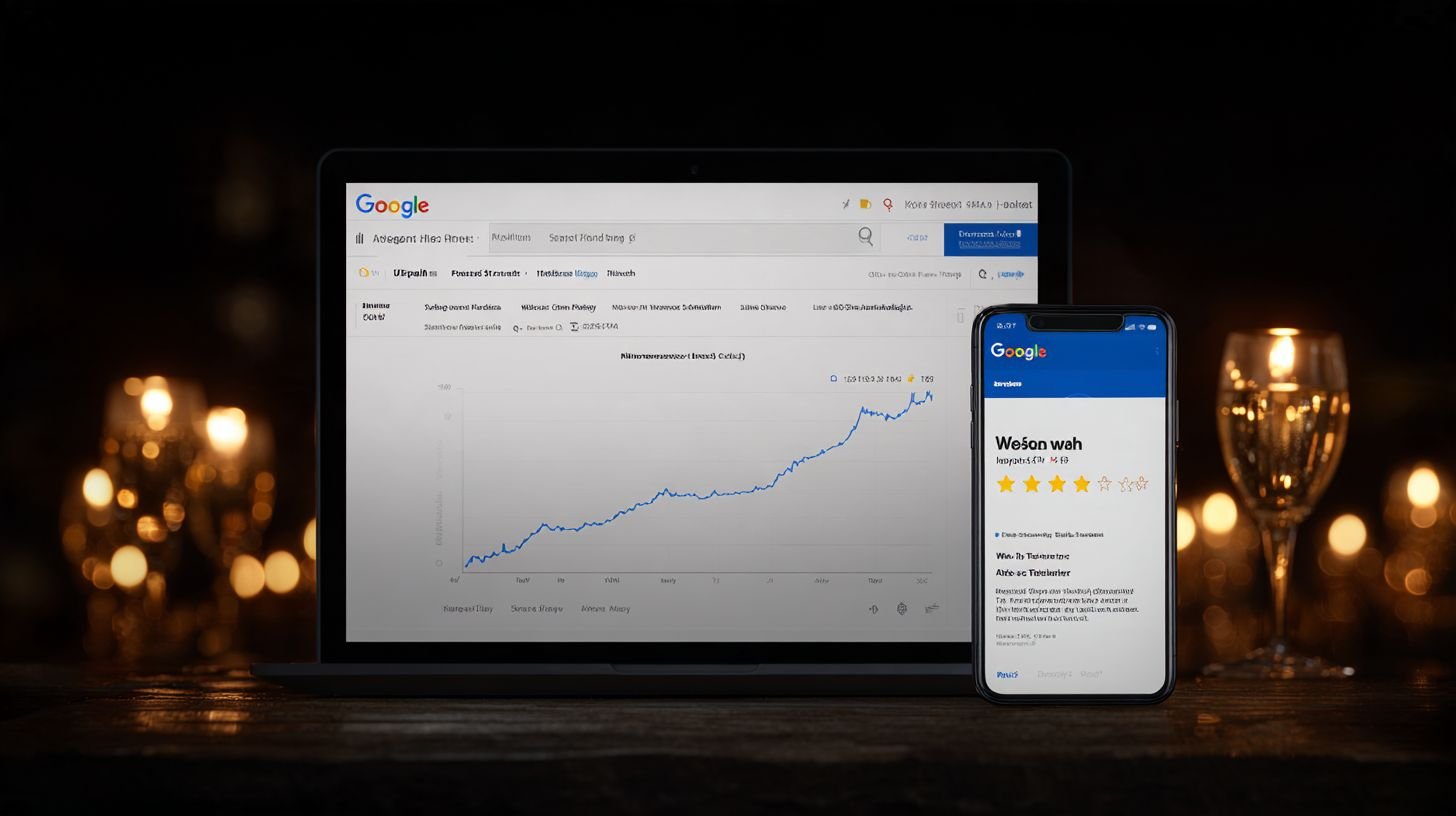
Hospitality SEO encompasses a range of strategies designed to improve a hospitality business’s visibility in search engines and drive direct bookings. It applies the core principles of search engine optimization to the specific realities of hotels, resorts, restaurants, and food and beverage lifestyle brands.
Unlike a generic business, a hotel competes for attention against large travel platforms, not just nearby properties. A restaurant, meanwhile, lives or dies on local discovery and last-minute decisions. Hospitality SEO accounts for both scenarios.
The goal is not simply ranking well. It is capturing guests at the moment they are deciding where to stay or eat, and guiding them toward booking on your own website rather than a third-party platform.
At Leppur Marketing, we focus on hospitality SEO, local search and AI discovery for boutique hotels and F&B lifestyle brands.
How Hospitality SEO Differs From General SEO
Hospitality SEO differs from general SEO in its focus on local search, direct booking intent, and competition with OTAs like Booking.com and Expedia.
General SEO often targets broad informational queries. Hospitality SEO targets people who are close to making a purchase decision.
Five differences stand out in practice:
- Local SEO and Google Business Profile optimization carry far more weight, since most hospitality searches happen near a specific place or within a specific city.
- High-intent keywords dominate. Queries such as “boutique hotel in Chicago” or “best restaurants near me” signal a guest ready to act, not just browse.
- Reducing OTA dependency is a strategic objective. Every direct booking saved from a commission-based platform improves margin.
- Schema markup for hotels and restaurants helps search engines display rates, availability, menus, and reviews correctly.
- Seasonality and event-based demand shape the calendar. A beach resort and a ski lodge need entirely different content rhythms.
On-page SEO, technical SEO, and content marketing all still matter, but they serve booking intent rather than general traffic. A hospitality marketing agency typically builds keyword research around destinations, room types, cuisines, and local events instead of broad industry terms.
Reviews also play a larger role than in most industries. Ratings and guest feedback feed directly into local rankings and influence whether a searcher clicks at all.
Why Search Visibility Matters for Hospitality Businesses
Search visibility is critical for hospitality businesses because the majority of guests begin their booking journey with a search engine, and higher visibility directly correlates with more direct bookings and revenue.
Research suggests that a large share of travelers use search engines to plan trips, and many leisure travelers start with an online search before choosing where to stay or eat.
When a property appears prominently in search results, several things happen at once:
- Guests find the official website before an OTA listing, which supports direct bookings.
- Commission costs fall as fewer reservations route through third-party platforms.
- Brand control improves, since the property shapes its own messaging, photos, and offers.
- Marketing spend works harder, because organic SEO and paid search reinforce each other.
Visibility also compounds. Backlinks, reviews, and consistent content marketing build authority over time, lowering long-term acquisition costs.
For hoteliers and restaurant owners, that makes SEO for hotels and restaurants less of a marketing experiment and more of an operating asset.
Why Hospitality SEO Matters for Hotels, Restaurants and Hospitality Brands
Hospitality SEO matters because it connects your business with guests at the exact moment they are searching for accommodations, dining, or experiences.
A traveler planning a weekend trip or an event planner comparing venues is already expressing intent. Showing up in those moments is where search engine optimization earns its place in your marketing budget.
Traffic alone does not pay the bills. What matters is capturing demand and guiding it toward a confirmed reservation, whether that happens on your own website or through a third-party platform.
SEO for hotels and restaurants works best when visibility and conversion are treated as one system rather than two separate projects.
This distinction separates hospitality SEO from general SEO practice. Our approach is shaped by real hospitality operations, not just marketing theory..
A hospitality marketing agency focuses on the queries that signal real purchasing intent, then builds pages that answer them clearly and make the next step obvious.
There is also the matter of OTA dependency. Listing sites deliver volume, but they also take commission and own the guest relationship.
A strong hotel SEO strategy gradually shifts a share of that demand toward direct bookings, where margins are healthier and guest data stays with you.
The sections below break this into two parts. First, how guests actually discover hospitality businesses online. Second, how to turn that visibility into bookings, reservations, and measurable revenue.
How Guests Discover Hospitality Businesses Online
Guests discover hospitality businesses through a variety of online channels, including Google search, Google Maps, OTAs, social media, and increasingly, AI-powered assistants.
The journey rarely happens in one step. It usually starts broad, narrows with intent, and ends with a comparison of reviews and prices.
Stage one is the broad search. Someone types a simple query such as “hotels in Barcelona” or “restaurants near me.” These terms are competitive and mostly informational, but they put your brand in front of a guest early. Ranking here builds familiarity even before a decision is made.
Stage two is refined intent. The same guest returns with specifics: “boutique hotel with pool in Barcelona,” “pet friendly hotel near the beach,” or “romantic restaurant with tasting menu.”
These long-tail keywords convert far better because they describe exactly what the guest wants. A boutique hotel that targets its true differentiators will often outperform larger competitors on these queries.
Stage three involves maps and local results. A large share of hospitality searches carry local intent, which is why local SEO and a well-maintained Google Business Profile matter so much. Photos, hours, categories, and accurate location data all influence whether you appear in the map pack and local listings.
Reviews shape the shortlist. Ratings and recent guest comments frequently decide which two or three properties a traveler compares. Responding to reviews and encouraging fresh ones supports both rankings and trust.
Finally, voice search optimization and AI assistants are changing how queries are phrased. People now ask full questions like “what is the best rooftop bar in Lisbon for sunset” rather than typing fragments.
Content that answers natural questions in plain language is more likely to be surfaced by these systems.
Turning Search Visibility Into Bookings, Reservations and Revenue
Turning search visibility into revenue requires a seamless path from search result to booking, with optimized landing pages, clear calls-to-action, and trust signals. Visibility without a smooth next step simply sends guests to a competitor with a faster checkout.
Match landing pages to search intent. If someone searches for “wedding venue with garden,” send them to a page about that, not your generic homepage.
Dedicated pages for rooms, dining, events, and packages give search engines clear topics and give guests immediate relevance. This is core on-page SEO work: headings, copy, meta descriptions, and internal links all reinforcing one theme.
Make direct booking easy. Place a prominent booking engine above the fold, keep the number of steps low, and show rates without forcing a phone call.
Reducing friction is one of the most reliable ways to lift conversion rates, and it directly reduces OTA dependency over time. Complement this with a strong CRO approach and clear meta title and meta tags to improve user experience and organic traffic.
Use schema markup so search results can display availability, pricing, ratings, and event details. Structured data helps your listing stand out and gives users more reasons to click before they ever reach your site.
It also strengthens your online presence and hospitality industry relevance.
Lean on reviews and user-generated content. Guest photos, testimonials, and review snippets act as trust signals at the decision stage. Encouraging and showcasing this content supports both organic SEO and conversion.
A solid content strategy and ongoing link building further amplify these efforts.
Track what actually converts. Tools like Google Analytics and Google Search Console show which queries drive bookings, which pages leak visitors, and where paid search or PPC campaigns can fill gaps.
Measuring ROI this way keeps your hotel SEO marketing grounded in revenue rather than rankings alone. Use Google Search Console and analytics data to understand which searches and pages are contributing to measurable results
A balanced program combines technical SEO, content marketing, off-page SEO through backlinks, and selective SEM. Each piece supports the others, and together they move a guest from first search to confirmed reservation.
Don’t overlook site speed, internal linking, and a mobile-first user experience.
For a deeper look at how hospitality SEO connects search visibility, direct bookings and AI discovery, see our complete Hospitality SEO guide.
The Main Types of Hospitality SEO

Hospitality SEO can be divided into distinct types based on the nature of the business, each with its own set of strategies and priorities.
A luxury resort in Madrid and a family-run Italian restaurant in Chicago both rely on search engine optimization, yet the way each earns visibility looks quite different.
At the foundation, both share the same core principles. That means solid technical seo, keyword research built around search intent, quality content, and a steady flow of backlinks from relevant sources.
Where they diverge is in focus. Hotels compete for room bookings across a wide geographic area and often battle OTAs for the same search results.
Restaurants compete within a tight radius, where proximity, reviews, and a well-managed Google Business Profile carry most of the weight. Using the right property management system and booking engine also impacts visibility.
This split shapes everything downstream. Keyword targets, schema markup, review strategy, and even the balance between organic seo and paid search shift depending on whether a property sells rooms or seats at a table. Platforms like Mews, Amadeus, and Prostay help properties adapt their approach.
Understanding which category a business falls into helps hoteliers, restaurateurs, and hospitality marketing teams avoid wasted effort. The following two sections break down the tactics that matter most for each.
Hotel and Resort SEO
Hotel and resort SEO focuses on optimizing for room bookings, amenities, and location-based searches, while competing with OTAs for visibility. The goal is to capture travelers at the research stage and move them toward direct bookings on the property’s own site.
Keyword research starts with destination and intent. A traveler might search “luxury hotel in Madrid” or “resort with spa in Phuket,” and each phrase signals a different stage of planning.
Long-tail keywords like “boutique hotel near Sagrada Familia with rooftop pool” convert well because they match specific needs.
On-page seo for hotel websites should cover room types, amenities, dining, and local attractions. Each page needs a clear title tag, a compelling meta description, and structured headings that reflect real search queries. Use proper H1, H2, and H3 hierarchy, optimize room pages and amenity pages, and ensure folio pages are well-structured.
Schema markup is especially valuable for hotels. Adding star ratings, price ranges, amenities, and availability helps search engines display rich results that stand out against OTA listings.
A hotel seo strategy typically includes:
- Optimizing property pages for location and amenity keywords
- Managing OTA listings so brand details stay consistent and accurate
- Running Google Hotel Ads and metasearch campaigns to capture high-intent traffic
- Building pages for group bookings, weddings, and event planners
- Earning backlinks from travel publications, local guides, and tourism boards
Consider integrating WhatsApp for guest communication, using email marketing to nurture leads, and leveraging platforms like Booking.com and TikTok to broaden reach.
Reducing ota dependency is a common goal. Every direct booking through the property’s own site protects margin and builds a first-party relationship that paid search alone cannot deliver.
Restaurant, F&B and Local SEO
Restaurant, F&B, and local SEO prioritizes Google Business Profile optimization, local citations, and review management to attract nearby diners.
Unlike hotels, restaurants rarely compete beyond a few miles, so proximity and relevance drive most of the online visibility. Optimizing for local SEO and managing your online presence are essential.
A fully built-out Google Business Profile is the single highest-impact asset. That means accurate hours, a current menu, high-quality photos of dishes and the space, and attributes like outdoor seating, dietary options, or takeout availability.
Local keyword research follows the same logic. Phrases like “best Italian restaurant in Chicago” or “brunch near me” reflect how diners actually search.
Voice search optimization matters here too, since mobile users often ask spoken questions on the go. Tools like Google Keyword Planner, Ahrefs, and Semrush can help estimate search volume and identify opportunities.
Reviews carry outsized weight in local rankings. Responding to feedback, both positive and negative, signals an active business and gives future diners confidence.
Schema markup for restaurants should cover menus, reservations, price range, and cuisine type. Combined with strong local content around events, seasonal menus, or neighborhood features, this helps a venue appear in more search results.
Mobile optimization is non-negotiable. Most diners search on a phone, often minutes before deciding where to eat, so fast load times and tap-friendly menus make a measurable difference.
A well-run local seo program also supports content marketing, from blog posts about signature dishes to coverage of community events, all of which reinforce relevance in the eyes of search engines and diners alike.
Hospitality SEO Keyword Research and Search Intent
Keyword research for hospitality SEO involves identifying the terms potential guests use at each stage of their journey, from inspiration to booking.
Get this wrong and even well-built pages struggle to rank, because the words on the page never match what travelers actually type into search engines.
What makes hospitality different is how heavily its keywords lean toward local and transactional intent. Someone searching “rooftop bar near me” or “book spa hotel in Bangkok” is usually close to a decision, not casually browsing.
That urgency shapes everything about how you choose and target terms.
Search intent also shifts by business type. A boutique hotel competes for destination and booking phrases, while a restaurant competes for neighborhood, cuisine, and reservation terms.
A hospitality marketing agency typically maps these intent groups separately before building any content plan, because a single blended keyword list hides which pages deserve the effort.
Understanding intent first also reduces wasted spend. Targeting a browsing phrase with a booking page, or a booking phrase with a blog post, tends to lower conversion and confuse search engines about what a page is for.
The sections below break down how to find intent-based keywords and how to handle the local, destination, and high-intent searches that matter most. This approach also supports corporate travel managers and event planners looking for specific amenities.
Finding Keywords Based on Guest and Customer Intent
To find keywords based on guest intent, categorize searches into informational, navigational, commercial, and transactional, and target each with appropriate content. This framework keeps your keyword research tied to real guest behavior instead of guesswork.
Each intent type calls for a different page format:
- Informational intent: queries like “what is hospitality SEO?” or “how far in advance should I book a hotel” suit blog posts and guides that build awareness.
- Navigational intent: searches for a specific brand or property name, which your homepage and branded pages should already own.
- Commercial intent: phrases like “best boutique hotels in Da Nang” or “top seafood restaurants in Lisbon” fit comparison landing pages and curated roundups.
- Transactional intent: terms such as “book hotel in Kuala Lumpur” or “reserve table for two” belong on booking and reservation pages.
For tools, Google Keyword Planner offers volume and cost estimates, Ahrefs and similar platforms reveal keyword difficulty and competitor gaps, and Google Search Console shows which queries already bring you impressions. Search Console is often the most useful starting point because the data comes from your own site. AI tools can also help uncover new keyword opportunities.
Prioritize long-tail keywords with clear intent. “Pet-friendly hotel with parking in Austin” converts far better than “hotels,” even though its volume looks smaller. Long-tail phrases also face less competition, which helps smaller properties compete without a large budget.
Local, Destination and High-Intent Hospitality Searches
Local, destination, and high-intent searches are the most valuable for hospitality businesses because they often lead to immediate bookings. These three groups deserve dedicated attention in any hotel SEO strategy.
Local searches include “near me” queries and city-specific terms, such as “brunch near me” or “hotel in downtown Chicago.” A fully optimized Google Business Profile, consistent name and address details, and local SEO signals help these searches surface your property in map results.
Destination searches combine a location with a property or venue type, like “beach resort in Phuket” or “vineyard wedding venue in Tuscany.”
Creating a dedicated landing page for each destination and property type gives search engines like Google a clear page to rank, rather than forcing one generic page to cover everything. This approach can also boost website traffic from qualified visitors.
High-intent searches include words like “book,” “reserve,” “deals,” and “availability.” These users are ready to act, so the landing page should load quickly, show rates or menus clearly, and make the next step obvious.
Strong meta descriptions and schema markup for hotels, restaurants, and events can improve how these pages appear in search results. For competitive markets, investing in PPC alongside SEO can capture this demand immediately.
Voice search optimization matters here too. Conversational queries such as “where can I find a late-night restaurant open now” reward natural phrasing, FAQ content, and direct answers.
Event Planners searching for venues follow a similar high-intent pattern, so venue and capacity details on dedicated pages help capture that demand. AI-driven search tools now also rely on this structured information.
On-Page SEO for Hospitality Websites

On-page SEO for hospitality websites involves optimizing individual pages to rank higher and earn more relevant traffic. Every element on a page, from the title tag to the internal links, sends signals to search engines about what the page covers and who it serves. This is a core component of Hotel SEO.
For hoteliers and restaurant owners, on-page work matters because it connects a specific page to a specific search intent. A traveler searching for a boutique hotel with a rooftop bar expects a page that speaks directly to that.
A diner looking for a private dining room wants details, not a generic homepage. For hotels, this often means optimizing for hotel SEO terms that guests actually use.
This is where hospitality SEO differs from general SEO. The audience is local, seasonal, and driven by dates, locations, and occasions. On-page SEO for hotels and restaurants has to reflect those patterns in titles, headings, body copy, and structured data.
Get these elements right and your pages become easier for search engines to crawl, understand, and rank. Get them wrong and even strong content marketing struggles to gain traction against OTAs and aggregator sites like Booking.com or Metasearch platforms.
Optimizing Pages, Titles, Headings and Meta Descriptions
Optimizing titles, headings, and meta descriptions ensures that search engines and users understand the content and relevance of each page. These elements are the first impression in search results, so they carry weight for both rankings and click-through rates.
Start with keyword research tied to hospitality intent using tools like Google Keyword Planner or Ahrefs. Look for terms guests actually use, such as “boutique hotel near the riverwalk” or “private dining restaurant downtown.”
Long-tail keywords often convert better because they match a specific need, especially for local SEO efforts.
Follow these guidelines for each element:
- Title tags: Include the primary keyword and brand name. Keep them under 60 characters so they display fully.
- Meta descriptions: Write a compelling summary with a natural call to action. Stay under 160 characters.
- H1: Use exactly one per page and include the primary keyword, as this H1 tag is crucial for search engines.
- H2 and H3: Structure content logically and work in secondary keywords. Use H2 for main sections and H3 for subsections.
- Schema markup: Add structured data where it applies, such as Hotel, Restaurant, or EventVenue types.
Here is a hotel example. A title tag might read “Riverside Boutique Hotel | Book Direct.” The meta description could say “Enjoy river views, a rooftop bar, and walkable dining. Check availability for your dates.”
The H1 would be “Riverside Boutique Hotel in Downtown Austin.”
A restaurant example follows the same logic. A title tag could be “Farm-to-Table Italian Restaurant | Casa Verde.” The meta description might read “Seasonal pasta, wood-fired pizzas, and a curated wine list.
Reserve your table tonight.” The H1 becomes “Farm-to-Table Italian Dining at Casa Verde.”
Schema markup deserves special attention in hospitality. Hotel and restaurant schema helps search engines surface ratings, price ranges, and availability.
That can improve visibility in rich results and support voice search optimization as more guests search hands-free. Tools like Google Search Console can help monitor how your structured data performs.
Internal Linking and Content Structure
Internal linking and a logical content structure help search engines crawl your site and distribute authority to important pages. They also shape how visitors move through your site, which affects direct bookings and reservations.
For hospitality brands, internal linking also supports Group Bookings and event inquiries.
A silo structure works well for hospitality sites. Group main topics like rooms, dining, amenities, and events, then build supporting content under each.
A spa page links to treatment details, and a weddings page links to venue capacity and catering menus. Social platforms like TikTok can also be leveraged to drive traffic to these pages.
Follow these internal linking practices:
- Use descriptive anchor text that includes relevant keywords, not “click here.”
- Link from blog posts to booking or reservation pages where it fits naturally.
- Keep important pages no more than three clicks from the homepage.
- Add breadcrumbs so visitors and search engines understand site hierarchy.
Anchor text matters because it tells search engines what the linked page is about. A link reading “explore our garden suites” is more useful than a generic phrase. It also helps guests know what to expect before they click.
Breadcrumbs improve navigation and can appear in search results as a path, which helps users understand where a page sits on your site. For a restaurant with multiple locations, breadcrumbs make it clear which city or neighborhood a menu page belongs to.
Internal linking also improves user experience. Guests who land on a blog post about local attractions should find an easy path to room details or a reservation page. That flow reduces friction and supports organic seo and CRO goals at the same time.
Review your structure periodically. As you add seasonal menus, event spaces, or new amenities, update internal links so the newest and most relevant pages get proper visibility. A clean structure keeps both crawlers and guests moving in the right direction.
Technical SEO for Hospitality Websites
Technical SEO ensures that search engines can crawl, index, and render your hospitality website efficiently, providing a solid foundation for all other SEO efforts. Without it, even the best content and keyword research struggle to rank.
For properties using systems like Mews or Amadeus, technical SEO must align with these platforms.
For hotels, resorts, and restaurants, technical problems hit revenue directly. A slow booking engine or a blocked page can push guests toward OTAs like Booking.com instead of your own site.
Technical SEO covers four core areas: site speed, mobile-friendliness, crawlability, and indexing. Each one influences how your property appears in search results.
This section breaks down the two most important technical pillars for hospitality brands. First, mobile performance and Core Web Vitals. Second, crawlability, indexing, and site architecture. These are foundational for any Hospitality Marketing Agency.
Get these right, and every other part of your hotel SEO strategy, from on-page SEO to content marketing, works harder. Ignore them, and your online visibility suffers no matter how strong your content is.
Mobile Performance, Speed and Core Web Vitals
Mobile performance, speed, and Core Web Vitals are critical because most travelers search for and book accommodations on mobile devices. Google uses these signals when ranking pages, so slow or unstable sites lose ground in search results.
According to Google’s web.dev guide to Web Vitals, Core Web Vitals measure three things: Largest Contentful Paint (LCP), Interaction to Next Paint (INP), and Cumulative Layout Shift (CLS).
LCP tracks how fast the main content loads. INP measures how quickly the page responds to taps. CLS measures visual stability, or how much the layout jumps around while loading.
A hotel booking page that shifts as a guest tries to tap “Reserve” creates frustration and lost direct bookings. Fast load times reduce bounce rates and increase conversions, which matters for both room reservations and restaurant table bookings.
Actionable steps to improve performance:
- Compress and resize images, and enable lazy loading so off-screen visuals load only when needed
- Minimize JavaScript and CSS by removing unused code and deferring non-critical scripts
- Use a content delivery network (CDN) to serve assets from servers closer to your guests
- Ensure responsive design so layouts adapt cleanly to every screen size
- Test regularly with Google PageSpeed Insights and fix the highest-priority issues first
Audit your booking engine separately from your main site. Third-party reservation widgets from providers like Folio or Prostay are often the slowest element on a hotel website, and they sit exactly where conversions happen.
Crawlability, Indexing and Website Architecture
Crawlability, indexing, and website architecture determine how effectively search engines can discover and rank your content. If search engines cannot reach a page, it will not appear in search results, no matter how good it is.
This is particularly important in competitive markets like London, Madrid, Barcelona, or Chicago.
Start with the basics. An XML sitemap lists your important pages, and a properly configured robots.txt file tells crawlers what to skip. Both should be checked whenever you add rooms, menus, or event spaces. Use Google Search Console to monitor indexing and crawl errors.
Canonical tags prevent duplicate content issues, which are common on hospitality sites with multiple URLs for the same room type or seasonal promotion.
Structured data, including schema markup for hotels, restaurants, and events, helps search engines understand your content and can power rich results. This also supports SEM strategies by improving ad quality scores.
Key architecture practices for hospitality websites, including optimizing for local SEO and Google Business Profile:
- Use a logical URL structure, such as /rooms/deluxe-suite or /menus/dinner, that reflects your site hierarchy
- Fix broken links promptly and set up proper 301 redirects when pages move
- Keep booking pages crawlable so they can rank and reduce OTA dependency
- Link internally between rooms, amenities, dining, and local area pages to spread authority
A clean architecture helps search engines index booking pages and gives hoteliers more control over direct bookings. It also supports local SEO when location pages and your Google Business Profile align with your site structure.
Review Google Search Console crawl reports periodically to catch errors early. Small technical fixes often deliver outsized gains in organic visibility for hospitality brands.
Local Search, Direct Bookings and AI Discovery
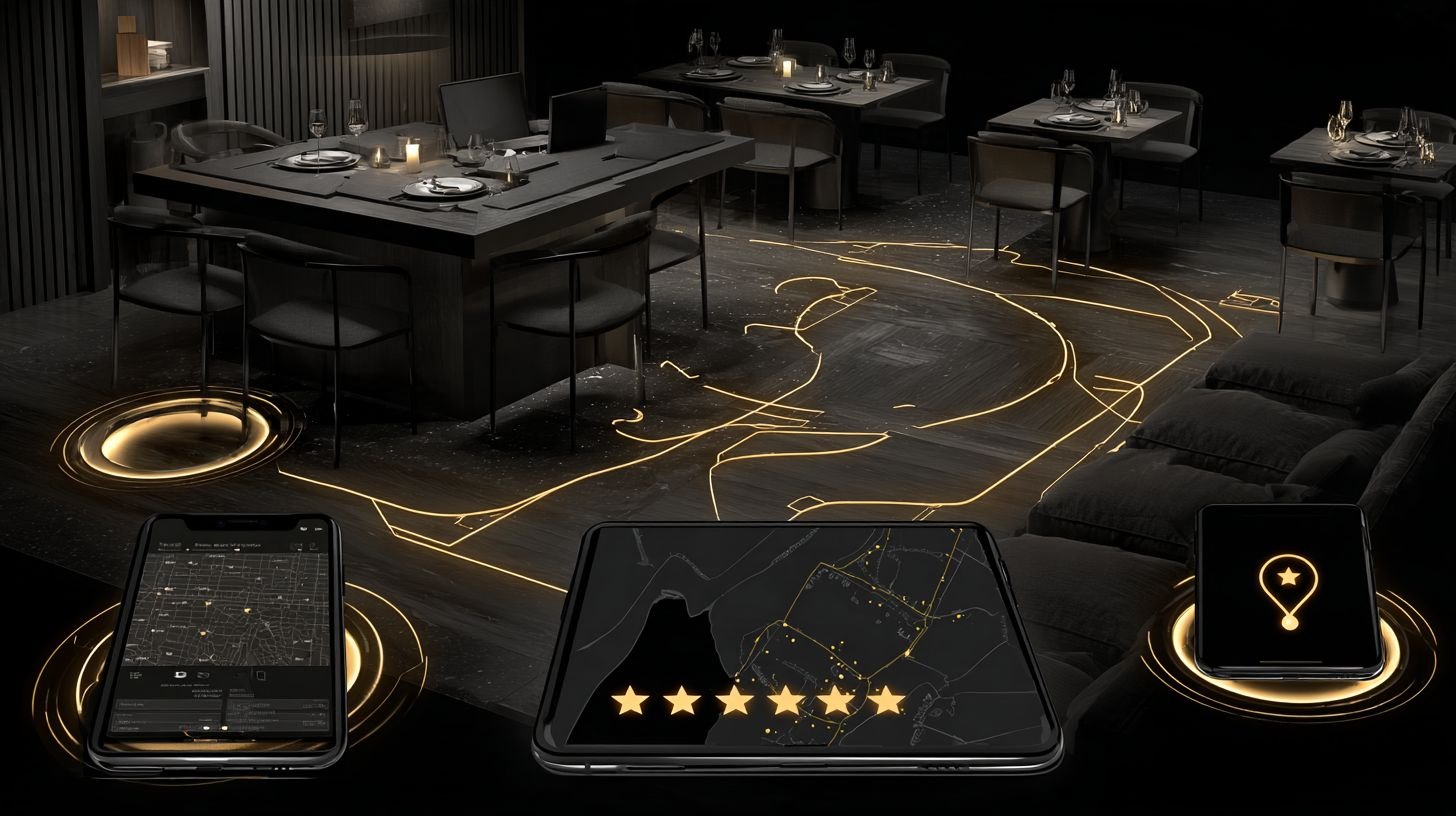
Local search, direct bookings, and AI discovery are interconnected pillars that drive visibility and revenue for hospitality businesses. When a traveler searches for a place to stay or eat, their journey often begins with a location-based query.
The results they see shape where they click, and where they click determines who earns the booking.
For hoteliers and restaurant owners, local visibility is the front door.
A well-optimized presence in map results and local packs puts your brand in front of high-intent searchers at the exact moment they are ready to decide. Ignoring this channel means handing that opportunity to competitors or OTAs.
Direct bookings matter because they protect margins and build lasting guest relationships. Every reservation made through Booking.com or another OTA carries a commission cost and limits how much guest data you can collect.
A strong Hotel SEO strategy shifts the balance by making your own website the most visible and trustworthy option in search results.
AI discovery is the newest layer. Search engines and AI-powered assistants now summarize information, answer questions, and recommend businesses directly in the results page. Hospitality brands with clear, well-structured content are more likely to be cited and recommended by these systems.
These three areas reinforce each other. Strong local signals support direct demand, and clean, authoritative content feeds AI recommendations.
The sections below explore each pillar in practical detail for hotels, resorts, restaurants, and F&B lifestyle brands, with examples from cities like London, Madrid, Barcelona, and Chicago.
Google Maps, Google Business Profile and Local Visibility
Google Maps and Google Business Profile are essential for local visibility, as they appear prominently in local search results and influence booking decisions.
For a boutique hotel or a neighborhood restaurant, the map pack is often the first thing a searcher sees. Appearing there with accurate, complete information can translate into meaningful direct bookings.
Optimization starts with claiming and verifying your profile. An unverified or duplicate listing undermines trust and splits your signals. Once verified, treat the profile as a living storefront rather than a one-time setup task.
Tools like Ahrefs and Google Keyword Planner can help you find the right terms to include.
Follow these steps to strengthen local visibility:
- Claim and verify your Google Business Profile, and resolve any duplicate listings.
- Complete every field: hours, attributes, menu links, service options, and accessibility details.
- Add high-quality photos that show rooms, dishes, ambiance, and the guest experience.
- Encourage and respond to reviews, both positive and negative, in a timely and professional tone.
- Use Google Posts for seasonal menus, events, and announcements to keep the profile active. For larger groups, consider a dedicated Group Bookings page.
- Ensure NAP consistency (name, address, phone) across all citations and directories.
Local pack rankings can drive significant direct bookings because they capture high-intent search behavior. Someone searching for a restaurant nearby or a hotel in a specific district is close to a decision.
A complete, well-reviewed profile with strong photos gives them a reason to choose you over the listing beside you. Event Planners and group bookers also rely on these signals when shortlisting venues.
Reviews deserve particular attention. Volume, recency, and response quality all shape how searchers perceive your brand. A thoughtful reply to criticism often does more for trust than a string of generic thank-you notes.
Event planners and group bookers read these exchanges closely before making contact. A dedicated Hospitality Marketing Agency can help manage this process.
Using SEO to Reduce OTA Dependency and Increase Direct Demand
Using SEO to reduce OTA dependency involves optimizing your own website to outrank OTAs for branded and high-intent keywords, capturing direct bookings.
When a traveler searches your property name plus “booking,” the top result should be your site, not a third-party platform that charges commission on the reservation.
Branded keywords are the first battleground. If an OTA outranks you for your own name, you are effectively paying for guests who already chose you. A focused hotel SEO marketing effort reclaims that traffic and keeps the booking on your terms, whether you use Mews, Amadeus, Prostay, or Folio as your PMS.
Several strategies shift demand toward direct channels:
- Target branded and high-intent keywords, such as your property name plus “booking,” “rates,” or “reservations.”
- Create compelling content that showcases unique value: room types, dining, experiences, and location advantages.
- Implement a best-rate guarantee so searchers have a clear reason to book on your site.
- Use schema markup to surface direct booking benefits, pricing, and availability in rich results, and leverage Metasearch channels like Google Hotel Ads.
- Leverage Email Marketing to nurture past guests and encourage repeat direct reservations.
On-page SEO supports this work. Clear meta descriptions, structured headings like H1, H2, and H3, and fast-loading pages help search engines understand your offer and help guests act on it.
Content marketing that answers real questions, from parking to pet policies, builds trust and reduces reliance on intermediaries.
The result is a gradual rebalancing. Instead of competing only on price inside an OTA listing, you compete on brand, experience, and information quality.
Over time, that shift lowers acquisition costs and gives you a direct relationship with the guest, which matters for repeat stays, event bookings, and long-term ROI. Agencies like Ink Digital specialize in this kind of work.
How to Build and Measure a Hospitality SEO Strategy
Building and measuring a hospitality SEO strategy requires a structured approach that aligns with business goals and adapts to evolving search technologies.
A scattered set of tactics rarely produces lasting results. Hotels, resorts, restaurants and F&B lifestyle brands need a framework that connects keyword research, on-page SEO, technical SEO, and content marketing to real revenue outcomes.
This is where an experienced Hospitality Marketing Agency can add value.
Measurement matters just as much as execution. Without clear tracking, hoteliers cannot tell whether their online visibility is translating into direct bookings or simply generating traffic that never converts.
The right framework ties every activity back to a measurable goal, whether that is more reservations, lower ota dependency or stronger brand recognition.
Search itself is also shifting. AI assistants and voice queries now shape how guests find and choose hospitality businesses, which means traditional ranking reports tell only part of the story.
A modern hotel SEO strategy must account for how people ask questions and how AI systems select the answers they surface.
The two sections below cover both sides of this equation. First, how AI search is reshaping hospitality discovery.
Second, how to measure organic visibility, bookings and revenue in a way that reflects true business impact rather than vanity metrics.
How AI Search Is Changing Hospitality Discovery
AI search, including voice assistants and AI-powered recommendations, is changing how guests discover hospitality businesses by providing direct answers and personalized suggestions.
Instead of scrolling through ten blue links, a traveler might ask a phone for the best boutique hotel near a conference center and receive a single spoken recommendation.
Voice search queries tend to be conversational and local. Someone might say “find a pet-friendly restaurant with outdoor seating near me” rather than typing a short keyword phrase.
This shift favors businesses that structure their content around natural language and clear, direct answers, and can be supported by PPC, SEM, and CRO efforts.
AI assistants such as Google Assistant and ChatGPT often skip the search results page entirely. They pull from structured data, reviews and authoritative content to form a recommendation.
That means optimizing for AI discovery requires three things working together:
- Schema markup that clearly labels rooms, menus, amenities, pricing ranges and locations
- Concise answers to common guest questions, written in plain language near the top of relevant pages
- Authoritative content backed by consistent listings, citations and genuine guest reviews
Long-tail keywords and question-based phrases become more valuable in this environment. A page built around “what time is check-in at a beachfront resort in Goa” or “best vegan tasting menu in central London” matches how people actually speak to assistants. Brands should also monitor social platforms like TikTok for emerging query trends.
For hotels, a practical AI optimization move is to add an FAQ section to each key page using schema markup. Answer questions about parking, pet policies, accessibility and dining hours directly.
Keep answers short and factual so an AI system can quote them without confusion.
Restaurants benefit from the same logic. Publishing an up-to-date menu with structured data, plus answers to questions about reservations, dietary options and dress code, gives AI assistants reliable material to recommend the venue.
Consistency across the Google Business Profile, website and third-party listings reinforces that authority. This is especially important for Event Planners, Group Bookings, and Hospitality Marketing Agency partners seeking visibility in Chicago, London, Madrid, and Barcelona.
Measuring Organic Visibility, Bookings and Revenue
Measuring organic visibility, bookings, and revenue involves tracking key performance indicators (KPIs) such as rankings, organic traffic, conversion rates, and revenue from direct bookings.
Rankings alone are a weak signal. A page can rank well and still fail to produce a single reservation. This is where Hotel SEO and hotel SEO strategies, along with CRO, play a critical role.
Google Search Console is the starting point for visibility. It shows impressions, clicks and average position for the queries that bring people to your site. Watching these metrics over time reveals whether SEO for hotel websites is gaining ground or stalling.
Tools like Ahrefs and Google Keyword Planner can supplement this data.
Google Analytics handles the behavioral side. It tracks organic traffic, conversion rates and revenue, provided goals are configured correctly. For hotels, that means setting up goals for booking engine completions and reservation inquiries.
For restaurants, it means tracking table bookings and phone taps. Platforms like Mews, Amadeus, Prostay, and Folio can integrate with analytics for deeper insights.
Revenue is the metric that matters most. A spike in traffic with flat bookings usually signals a mismatch between search intent and landing page content.
Comparing SEO investment to revenue from organic channels produces a clear ROI picture that hoteliers can act on. This is where Hospitality Marketing Agency expertise and Ink Digital can help.
One metric that deserves consistent attention is the OTAs dependency ratio. This measures how much of your booking volume comes from third-party platforms like Booking.com versus direct channels.
A rising ratio often means paid search and organic SEO efforts need reinforcement, and SEM and Metasearch strategies may need adjustment.
| Metric | Tool | What It Reveals |
|---|---|---|
| Impressions and clicks | Google Search Console | Visibility in search results |
| Organic traffic and conversions | Google Analytics | Behavior and booking intent |
| Revenue from direct bookings | Analytics plus booking engine | True business impact |
| OTA dependency ratio | Booking data | Balance of direct versus third-party demand |
Beyond these core tools, hospitality brands should monitor backlinks and local SEO signals such as Google Business Profile engagement.
Reviews, direction requests and call clicks all feed into how search engines and AI assistants judge a property’s relevance. Email Marketing and TikTok can also drive engagement for Hospitality Marketing Agency campaigns.
A Hospitality Marketing Agency often builds a simple monthly dashboard combining these sources. The goal is not data overload but a clear view of whether organic SEO and paid search are moving the business toward more direct bookings and stronger margins. Ink Digital specializes in this approach for hotels in Chicago, London, Madrid, and Barcelona.
Want to see where your property stands? Explore our free hospitality visibility audits or request a free visibility audit from Leppur Marketing.